The first thing you notice about a modern data center is the hum. That steady vibration tells you everything inside depends on power. Not abstract electricity, but a chain of systems that generate it, move it, condition it, and keep it flowing when everything else fails. We used to treat power as an engineering problem, design for redundancy, test it, maintain it, and move on. That approach worked when the main risk was failure. It doesn’t hold up when disruption, intentional or otherwise, enters the picture. Power now sits on the security boundary.
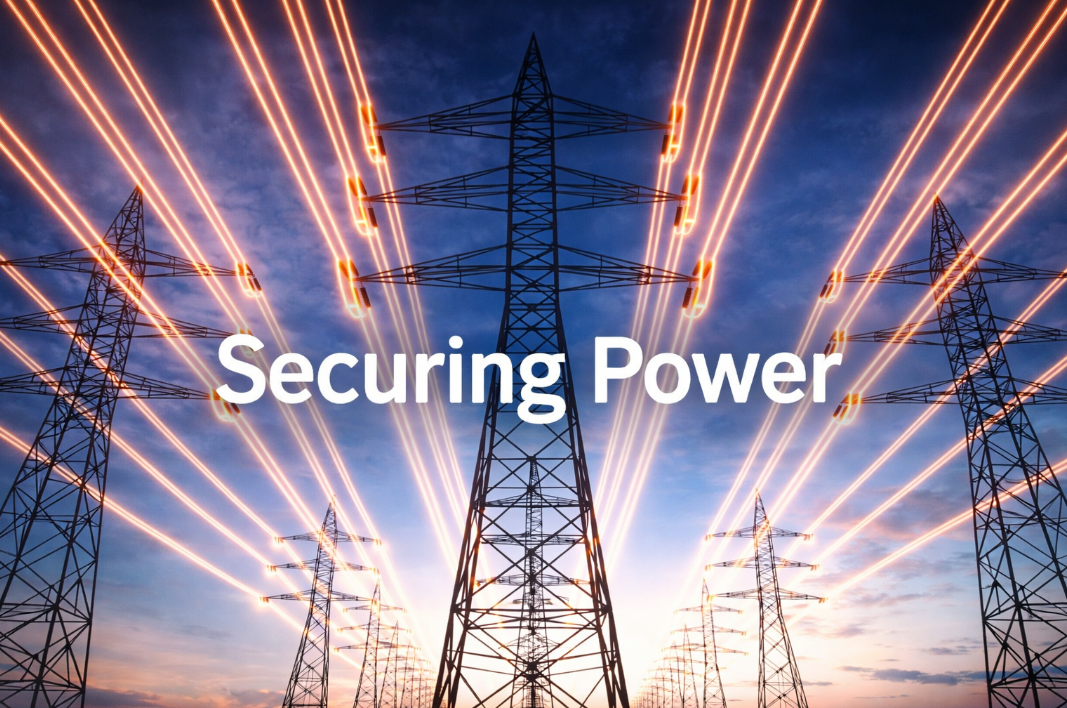
When you look at a data center through that lens, the footprint expands. The substation outside the fence matters as much as the server inside. The generator yard becomes a target and the control systems that manage load and switching become automation tools becoming cyber-physical assets that someone could manipulate. That shift forces a simple question: who owns power security? Most organizations don’t have a clear answer. Facilities teams manage infrastructure. Security teams handle access and monitoring. Cyber teams focus on networks. Utilities control the grid. Everyone owns a piece, but no one owns the whole and that gap creates risk.
Governance closes that gap by defining ownership and forcing alignment. A strong model brings facilities, security, cyber, and operations into one structure and assigns responsibility for real risks, grid dependency, generator readiness, fuel integrity, and system recovery. It also pushes power resilience into executive conversations, where it belongs. If power fails, the business stops. That’s not a facilities issue but rather a business risk. Policy turns that structure into action. Most organizations already have policies for maintenance and safety, but fewer treat power as a security domain. That’s where the difference shows up. A generator test schedule doesn’t address fuel contamination. An access list for an electrical room does not account for misuse or error. A design standard does not always consider how someone might exploit the system.
Strong policies close those gaps. They define how teams secure fuel supply chains, how they control and audit access, and how they respond to power-related incidents. They also shape design decisions. Redundancy levels, physical hardening, and segmentation of control systems are not just engineering choices; they are policy decisions that directly affect risk. Compliance adds another layer, but it doesn’t solve the problem. Standards like NERC CIP, NFPA codes, ISO frameworks, and NIST guidance set a baseline. They address safety, reliability, and documentation, and they help organizations build and operate systems correctly. They do not ask how an attacker might approach those systems.
Compliance checks whether you followed the rules. Security asks whether the rules are enough. A data center can meet every requirement and still carry risk. Treating compliance as the goal creates blind spots. Treating it as the starting point creates awareness. Power infrastructure also connects directly to the grid, which introduces another level of dependency. Data centers influence how utilities plan capacity, build transmission, and manage load. In some regions, data center demand drives major grid decisions. That relationship cuts both ways. If the grid fails, the data center feels it. If demand spikes, the grid must respond. That interdependence expands the risk surface beyond the site itself.
This dynamic plays out differently across regions. In North America, operators focus on grid coordination and regulatory frameworks. In Europe, they deal with energy transition and policy pressure. In Asia-Pacific, rapid growth strains infrastructure. In emerging markets, reliability and physical security still dominate. One approach won’t work everywhere, so organizations need a governance model that sets standards while adapting to local conditions. Architects, engineers, and security consultants shape that outcome early. Architects influence layout and exposure. Engineers design how systems operate and fail. Security consultants bring a threat perspective that others may not consider. When these roles align early, security becomes part of the design. When they don’t, teams try to add it later, and that rarely works as well.
All of this points to a larger shift from redundancy to resilience. Redundancy gives you backup. Resilience prepares you for disruption. It assumes something will go wrong, whether through failure, error, or attack, and builds systems and processes that can handle it. Power sits at the center of that shift. Every system in a data center depends on it, every outage traces back to it in some way, and every risk, physical, cyber, or operational, touches it. If organizations treat power as infrastructure alone, they will miss that. If they treat it as a security domain, they will start to see the full picture. The hum doesn’t change, but what it represents does.
If this topic resonates with you, I go deeper in my book, Data Center Security: The Blueprint for a Resilient, Secure Infrastructure. Center Security: The Blueprint for a Resilient, Secure Infrastructure. I break down how power, physical security, and operational risk intersect across the full data center lifecycle, from site selection and design through operations. I also share real-world lessons from working in hyperscale, enterprise, and mission-critical environments, along with practical ways to apply these concepts with architects, engineers, and security teams. If you’re responsible for protecting critical infrastructure, this is a conversation worth continuing.