Over the past several weeks, I’ve been closely following multiple reports and analyses around drone strikes targeting data center infrastructure in the Middle East. Watching this unfold, and reading through the coverage from different perspectives, it’s clear this is a geopolitical headline. From a security standpoint, it’s impactful. It reinforces something many of us in the industry have discussed for years: data centers are critical infrastructure, and they are now part of the modern threat landscape in a very real, physical way.
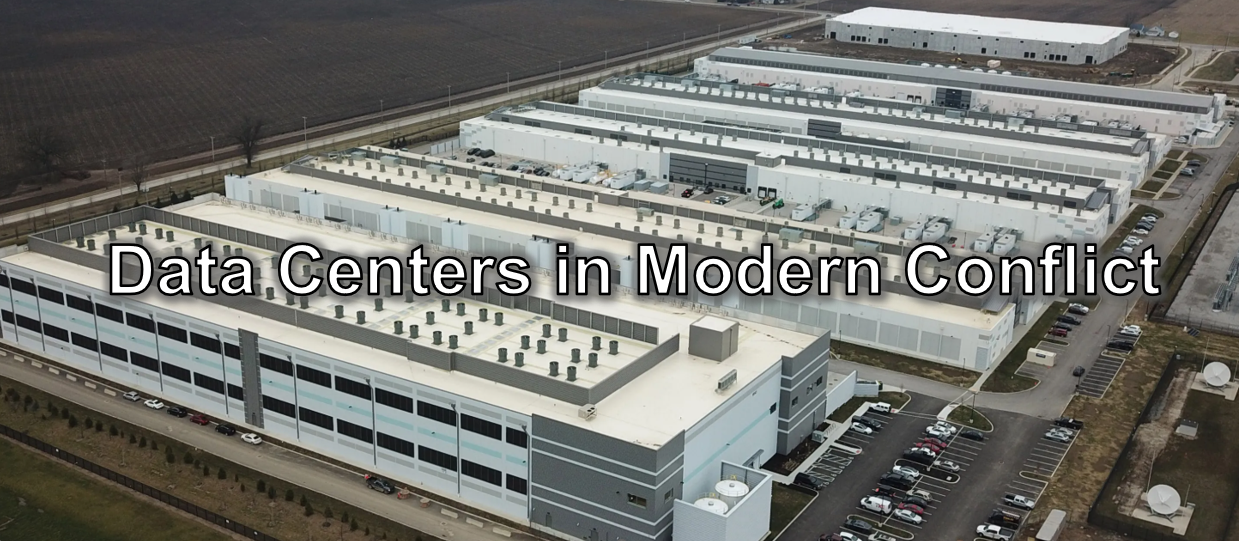
The recent strikes on cloud infrastructure, including Amazon Web Services (AWS) facilities, highlight a shift that is both strategic and operational. These were kinetic attacks, drones targeting physical structures, power systems, and operational continuity. That distinction matters because it exposes a gap in how many organizations still think about security. We’ve spent years maturing cyber defenses and building resilient architectures, but far fewer environments are designed with the assumption that someone may physically target the facility as part of a broader conflict.
What stands out most is the level of dependency. Data centers underpin financial systems, communications, logistics, and government operations. When a facility is disrupted, the impact isn’t isolated, it cascades. That makes these sites attractive targets, especially in asymmetric warfare scenarios where low-cost technologies like drones can be used to disrupt high-value infrastructure. Whether or not a facility directly supports government operations becomes almost secondary; the perception alone can place it in the targeting equation.
From a security perspective, this is not a departure from historical patterns, it’s an evolution. Critical infrastructure has always been a target. What has changed is what we now define as “critical.” Disrupt them, and you disrupt everything connected to them. The principles of warfare, disruption, cascading impact, and cost asymmetry, remain the same. The target set has simply shifted.
These events also expose a design assumption that needs to be challenged. Most data centers are engineered for resilience against known risks: equipment failure, natural disasters, insider threats, and cyber incidents. They are not typically designed for contested environments involving coordinated drone attacks or state-sponsored targeting. Even the most advanced facilities still rely on physical systems, power, cooling, structural integrity, that can be disrupted through direct attack. Redundancy helps, but only if it is geographically and geopolitically aligned with the threat environment.
This is where the conversation needs to move. Security must be integrated into how we think about site selection, architecture, operations, and governance from the start. In some geopolitical areas, airspace awareness, counter-drone strategies, intelligence-driven security operations, and region-level resilience planning all need to become part of the discussion. Physical security, cybersecurity, and operational continuity cannot operate in silos, they must function as a single, coordinated system.
These are exactly the themes I explore in my book, Data Center Security: The Blueprint for Resilient Infrastructure. The core idea is simple: security is not about deploying more technology, more so it is about aligning people, processes, and technology into a cohesive strategy that can withstand both expected and unexpected threats. What we’re seeing now reinforces that message. The risks are expanding beyond the traditional perimeter, and the response must evolve with it.
If anything, these incidents should prompt a broader reassessment across the industry. How we select sites. How we design facilities. How we define resilience. And ultimately, how we think about security risk as a foundational element of critical infrastructure.
The industry has long described data centers as the backbone of the digital economy. What we are now seeing is that the backbone can become part of the battlefield and security has to be ready for that reality.