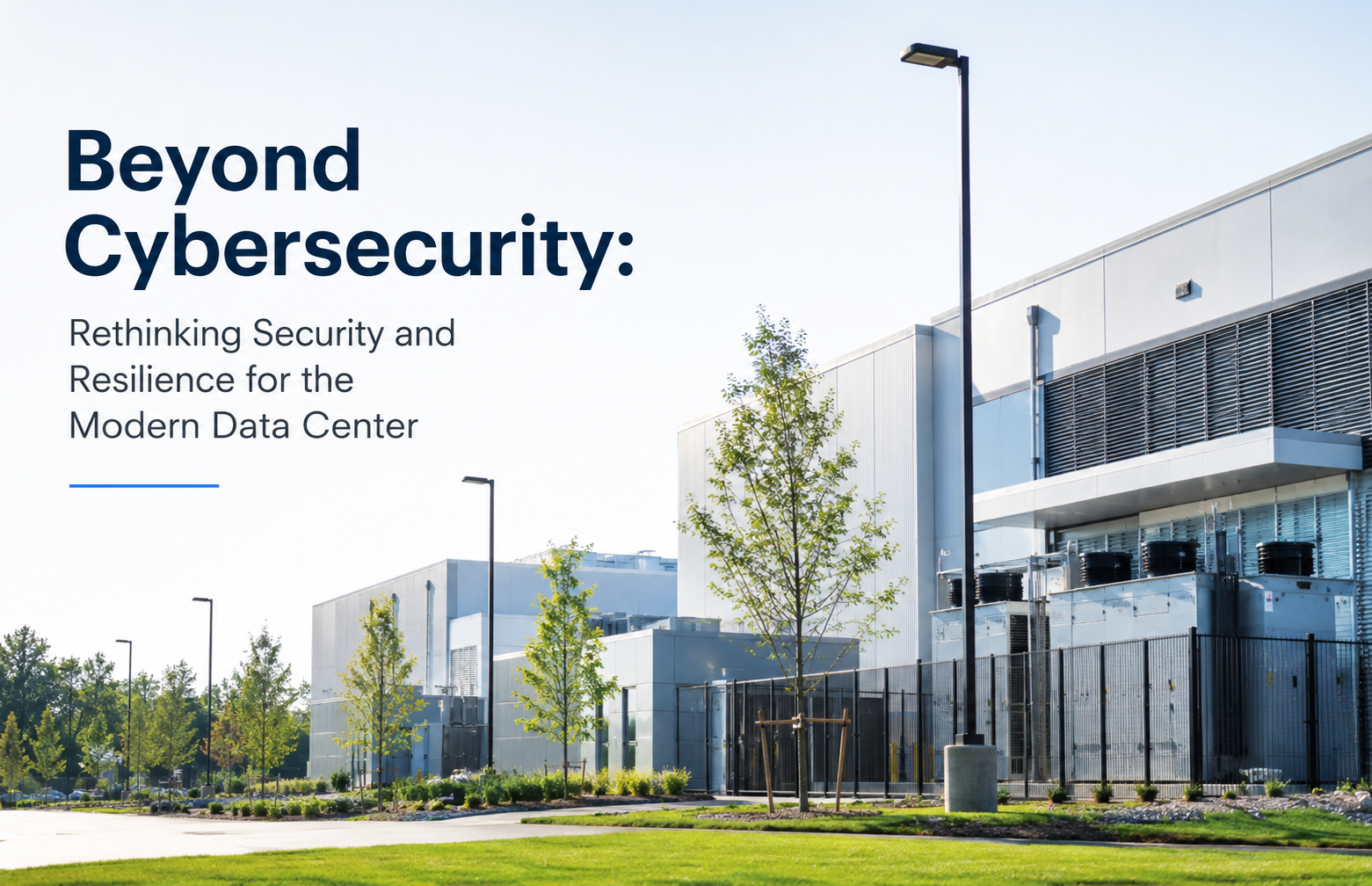
For years, discussions about data center security focused primarily on cybersecurity. Firewalls, endpoint protection, network segmentation, and threat detection platforms dominated the conversation. While those capabilities remain critical, the rapid expansion of artificial intelligence infrastructure, hyperscale campuses, and cloud computing has exposed a much broader reality: data center security is no longer solely a cyber problem. It is an infrastructure problem.
Today’s data centers face threats that extend far beyond malicious code. Operators must now contend with utility failures, severe weather events, supply chain disruptions, insider threats, physical attacks, and even geopolitical instability. As organizations invest billions of dollars into AI-ready infrastructure, security leaders are being forced to rethink traditional approaches and adopt a more comprehensive view of resilience.
One area receiving increased attention is site selection. Historically, location decisions were driven by factors such as power availability, network connectivity, tax incentives, and proximity to customers. Today, security and resilience considerations are becoming equally important. Recent research suggests that a significant percentage of planned data center developments are being built in regions vulnerable to natural disasters, including hurricanes, flooding, wildfires, and severe storms. While these risks have always existed, the concentration of critical digital infrastructure in high-risk areas raises new concerns about operational continuity and long-term resilience.¹
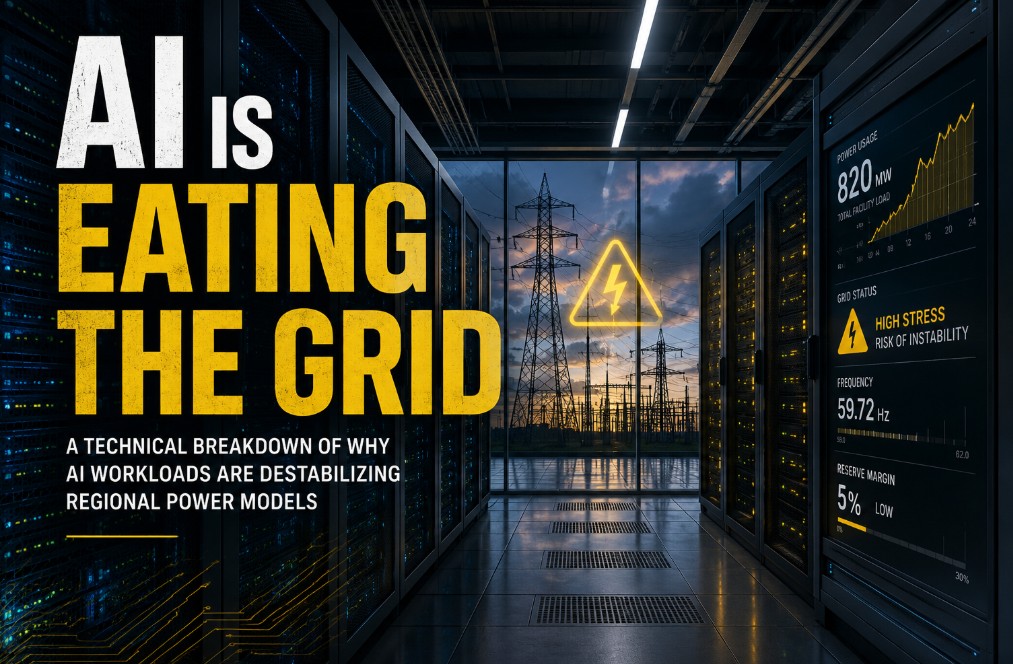
The growing demand for AI infrastructure is amplifying these challenges. Modern AI facilities consume unprecedented amounts of power and water, creating new dependencies on utility infrastructure. As power requirements continue to rise, utility substations, transmission systems, backup generation, and fuel supply chains are becoming critical security assets. A cyberattack against a utility provider or a physical disruption to power delivery can have consequences that extend far beyond a single facility. Security professionals must increasingly view utility systems as part of the protected environment rather than simply external services.
At the same time, physical threats are becoming more visible. Incidents involving attacks on critical infrastructure around the world have demonstrated that facilities supporting digital services are not immune from physical disruption. While many organizations continue to invest heavily in cybersecurity controls, the same level of attention is not always applied to perimeter protection, vehicle barriers, access control systems, contractor management, or utility security. The result is often an imbalance where organizations protect the data while underestimating the risks to the infrastructure that enables that data to exist.
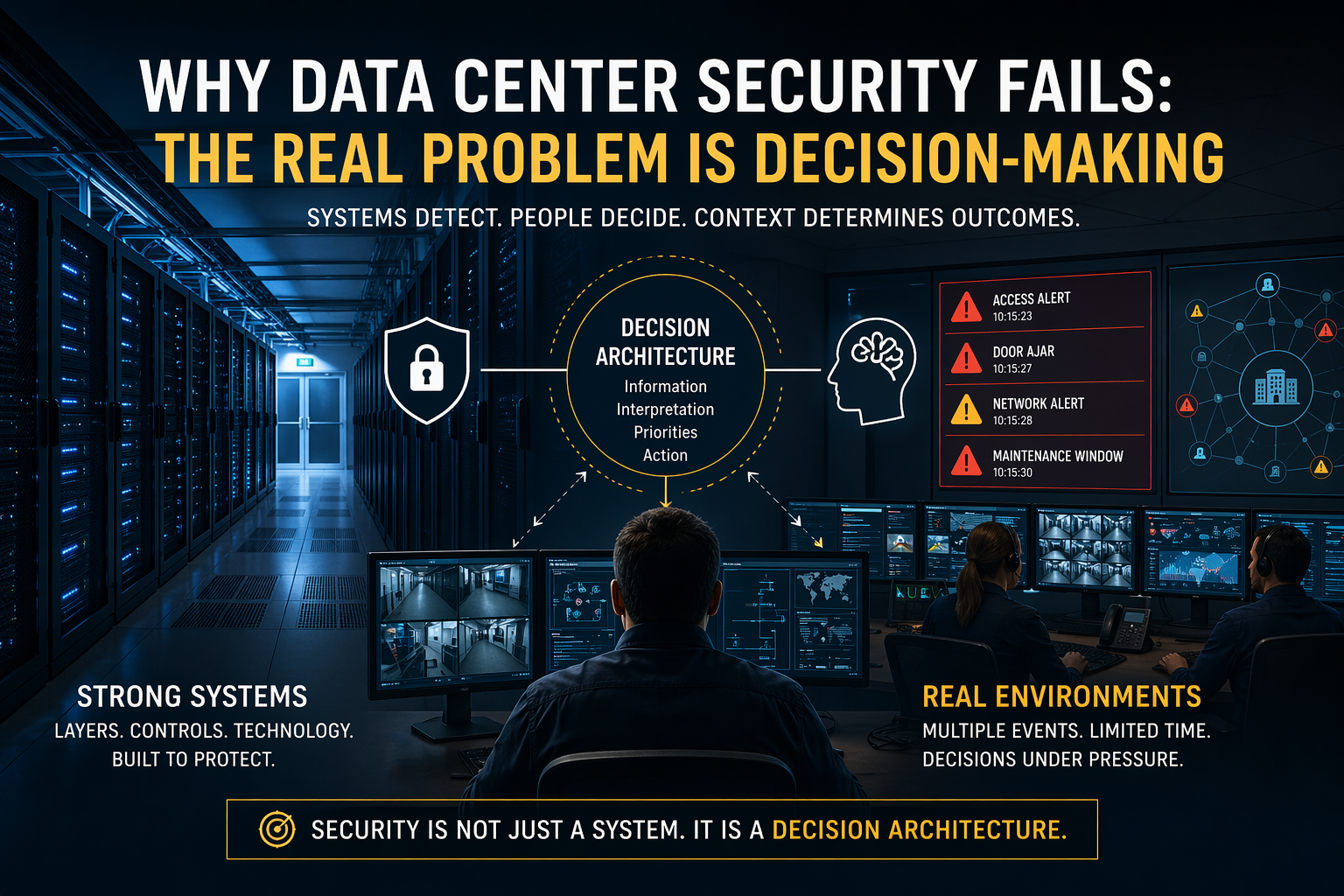
The concept of convergence has therefore become more important than ever. Security teams can no longer operate in isolated disciplines. Physical security, cybersecurity, operational technology, facilities management, and business continuity teams must work together to identify and mitigate risk. A compromised building management system, for example, can have operational consequences similar to those of a cyberattack. Likewise, a failure in cooling infrastructure or utility distribution can create service disruptions even when every cybersecurity control remains fully functional.
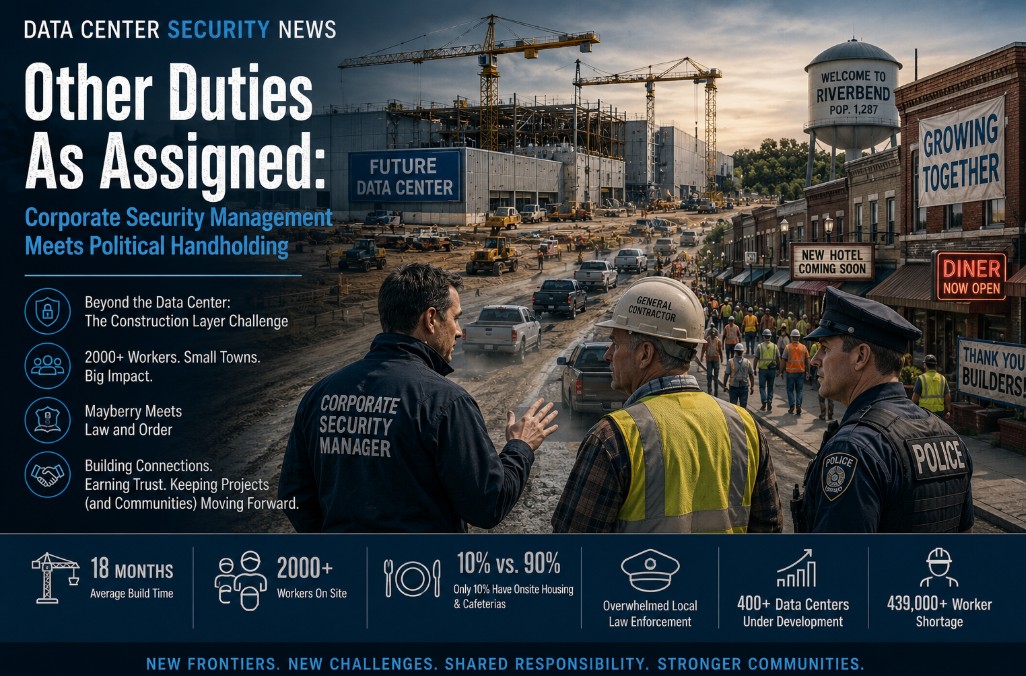
Industry research also highlights the growing importance of human risk. Insider threats, third-party contractors, vendors, and supply chain partners often possess levels of access that rival those of full-time employees. As facilities become more automated and remotely managed, organizations must ensure that physical access management, identity management, and vendor oversight evolve alongside technological innovation. Security controls are only as strong as the processes that govern who can access critical systems and infrastructure.
The future of data center security will likely be defined by resilience rather than protection alone. Organizations that succeed will not simply build stronger defenses; they will design facilities capable of operating through disruption. That means selecting sites with resilience in mind, securing utility infrastructure, integrating physical and cyber security programs, and preparing for scenarios that extend beyond traditional threat models.
The industry has spent decades protecting data. The next challenge is protecting the infrastructure that makes data possible. As AI, cloud computing, and digital transformation continue to accelerate, the organizations that embrace a holistic view of security and resilience will be best positioned to support the world’s growing dependence on digital infrastructure.
Notes
Craig Hale, “56 Percent of New US Data Centers Could Be Built in High-Risk Disaster-Prone States,” TechRadar Pro, June 2026.
“Data Centers Confront Rising Cyber and Physical Security Threats,” Bloomberg Law, 2026.
Uptime Institute, Data Center Security: Reassessing Physical, Human and Digital Risks, Uptime Institute Research Report.
“Physical Security,” Data Center Knowledge, Security and Risk Management Section, accessed June 2026.
“Physical Security,” Data Center Dynamics, Security and Risk Management Coverage, accessed June 2026.
Reuters/Ipsos Poll, “Americans Wary of AI-Driven Data Center Boom,” June 2026.