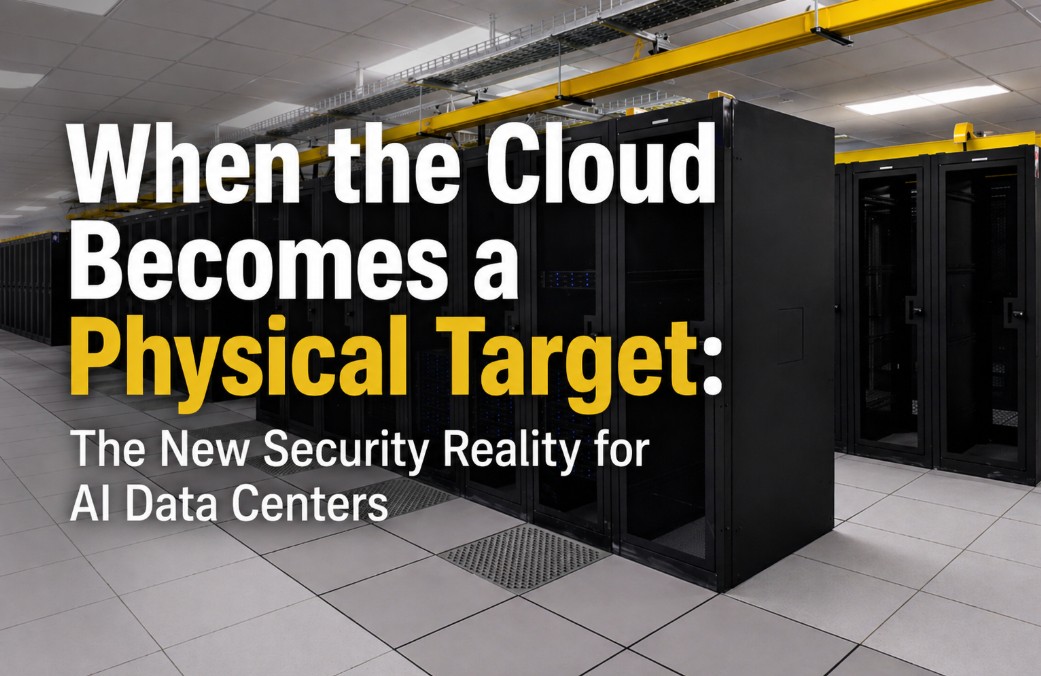
The modern data center has long been positioned as a digital fortress, engineered to withstand cyber threats through layered defenses, redundancy, and tightly controlled access. That model is no longer sufficient. The rapid rise of artificial intelligence has transformed data centers into critical infrastructure whose disruption carries consequences far beyond a single organization. What was once a back-end operational asset is now a foundational component of economic stability, national security, and global competition. As a result, the threat landscape is shifting. The next major data center incident is unlikely to begin with malware alone. It may begin at a substation, along a fiber route, within a cooling system, or through a trusted individual with legitimate access. The boundary of risk has expanded beyond the data hall, and security must expand with it.
Artificial intelligence workloads are driving unprecedented demand for power, water, land, and connectivity, tying data centers more tightly than ever to public infrastructure and regional systems. This dependency introduces new vulnerabilities that sit outside the traditional scope of data center security programs. The World Economic Forum has formally identified AI infrastructure as critical infrastructure, warning that disruptions to these facilities now have systemic implications across economies and societies.¹ At the same time, industry analysis from Data Center Knowledge highlights that many of the most significant risks are not inside the facility, but within the interconnected systems that support it, including utilities, transportation networks, and regional dependencies.² This represents a fundamental gap between how data centers have historically been secured and how they must be secured going forward.
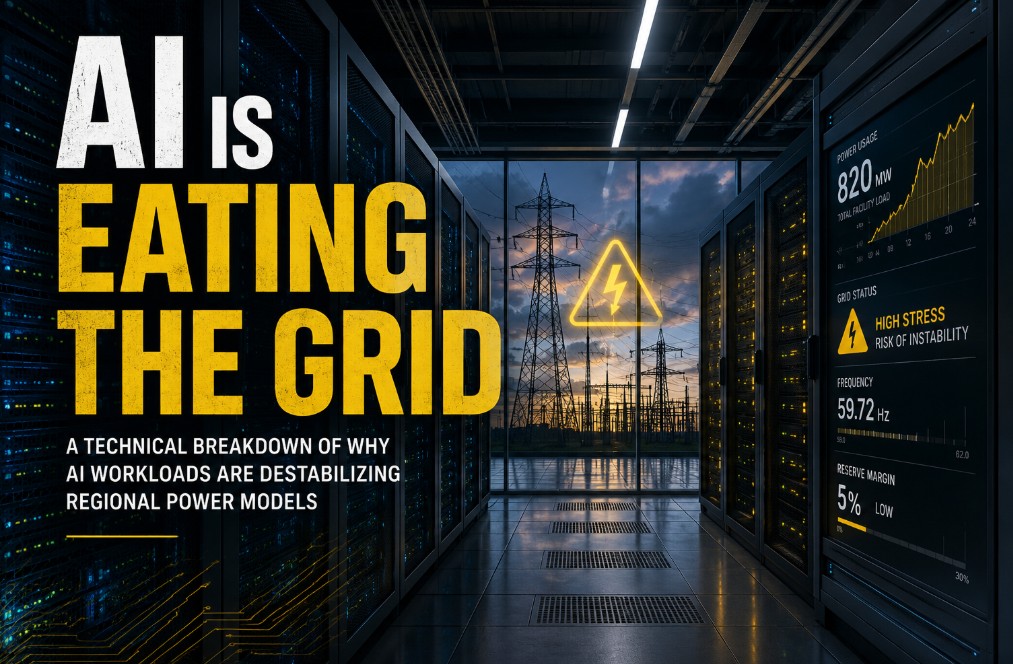
The evolving threat environment is increasingly defined by physical and hybrid risks. Attackers are no longer focused solely on penetrating hardened networks; they are targeting the infrastructure that enables those networks to function. Power infrastructure provides a clear example. Research from the IEEE indicates that North American electrical grids have experienced thousands of physical security incidents in recent years, ranging from vandalism and theft to coordinated attacks on substations.³ In high-density AI environments, even localized disruptions to power can cascade into significant operational impact. At the same time, intelligence reporting from The Soufan Center points to a rise in online rhetoric and planning related to the sabotage of data centers, driven by ideological, environmental, and geopolitical motivations.⁴ These developments reflect a broader shift in adversarial thinking, where the focus is less on breaching the facility itself and more on exploiting the dependencies that sustain it.
This shift demands a redefinition of data center security. Traditional approaches centered on perimeter defenses, access control systems, and internal monitoring must evolve into a broader, integrated model that addresses the full lifecycle and ecosystem of the facility. Security must extend from the point of power generation through transmission, distribution, and facility operations, ultimately reaching the equipment itself. Power supply chains, water and cooling systems, fiber routes, and supply chain dependencies must all be treated as integral components of the security architecture. Each represents a potential point of failure, and each must be assessed and managed as part of a unified risk strategy. This “grid-to-rack” perspective recognizes that resilience is not created within the walls of the data center alone but across the entire system that enables its operation.
At the same time, the operational dimension of security has become more complex. The scale and speed of AI-driven expansion have introduced a surge in contractors, vendors, and third-party personnel, increasing the challenge of managing access and oversight. Insider risk, whether intentional or accidental, remains one of the most persistent threats. In many cases, governance structures have not kept pace with the rapid development of infrastructure, creating gaps between security design and execution. Effective security in this environment requires more than technology; it requires disciplined governance, clearly defined processes, and accountability across all levels of the organization. Policies and procedures are not secondary considerations but foundational elements that ensure security controls function as intended.
An additional layer of risk emerges from the growing visibility of data centers within the communities in which they operate. Once largely invisible, these facilities are now highly visible due to their scale, energy consumption, and environmental impact. This visibility introduces new forms of risk, including public opposition, activism, and localized disruption. As communities become more aware of the presence and implications of AI infrastructure, organizations must incorporate these dynamics into their broader security strategies. Physical security is no longer limited to preventing unauthorized access; it must also account for how facilities interact with their surrounding environment and how those interactions influence risk.
The industry is at a critical inflection point. The traditional model of data center security, built around protecting a defined physical boundary and securing digital assets within it, was designed for a different era. AI infrastructure requires a more expansive and integrated approach, one that accounts for interdependencies, anticipates cascading failures, and aligns with operational realities from the earliest stages of planning and design. Security must be treated as a system rather than a collection of controls, embedded into site selection, architecture, engineering, and ongoing operations.
The boundary of the data center has fundamentally changed. It no longer ends at the fence line or the walls of the facility but extends outward into the infrastructure that supports it. Organizations that recognize this shift and adapt their security strategies accordingly will be positioned to build resilient and reliable operations. Those that do not will continue to protect the interior while remaining exposed at the edges. The cloud has not become less secure; it has become more critical.
References
- World Economic Forum, “Why AI Infrastructure Is Now Critical Infrastructure,” 2026.
- Data Center Knowledge, “Data Centers Under Fire: A Growing Critical Infrastructure Risk,” 2025.
- IEEE, “Physical Attacks on the Power Grid and the Need for Security,” 2025.
- The Soufan Center, “IntelBrief: Threats to Data Centers and Critical Infrastructure,” 2025.