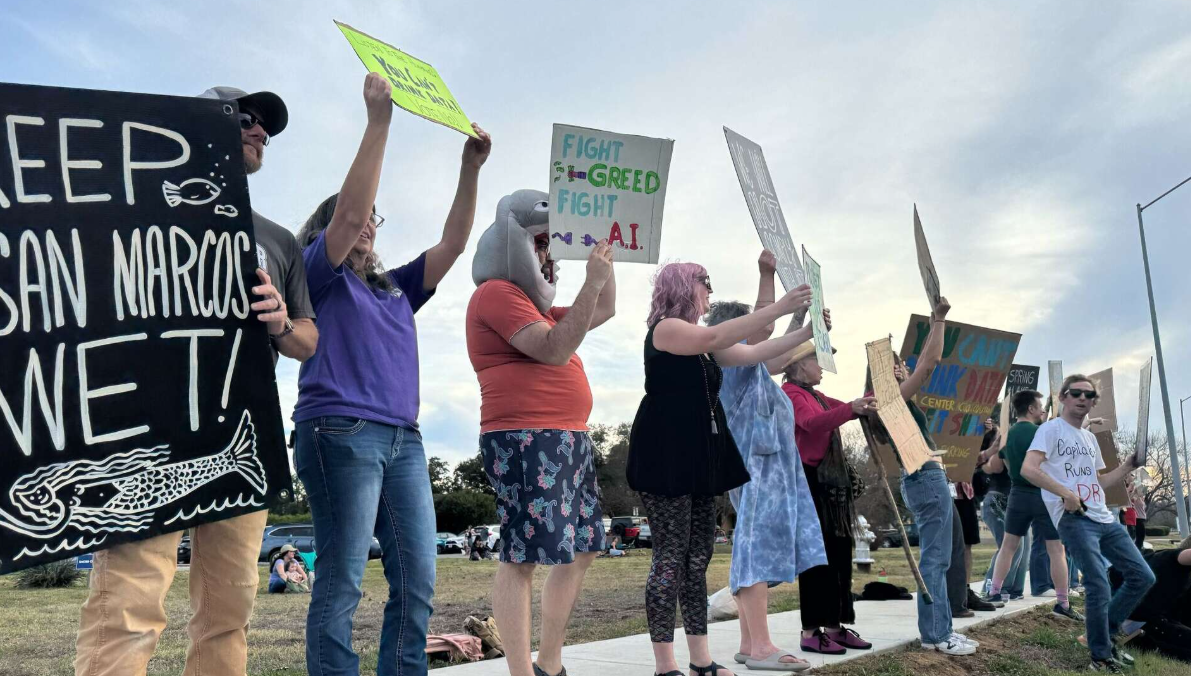
Recent incidents in Indianapolis, Indiana, and Ontario, California signal a shift that data center security teams can no longer treat as peripheral. Grievance-driven threats are moving from rhetoric to action. A public official’s home was targeted with gunfire after supporting a data center project, with a note left reading “No Data Centers,” underscoring the explicit link between infrastructure development and political violence.¹ At the same time, broader research and reporting indicate that hostility toward data center development is intensifying across the United States, with threats, harassment, and increasingly aggressive rhetoric directed at both infrastructure and the individuals supporting it.² These events, coupled with growing national resistance to infrastructure perceived as environmentally or economically extractive, are not isolated. They point to a deeper structural issue: the widening gap between institutional decision-making and public acceptance.
At the center of many data center conflicts is not a dispute over legality, but over legitimacy. Projects typically move forward through established processes, zoning approvals, environmental reviews, utility agreements, and tax incentive negotiations, and are often fully compliant from a governance standpoint. However, research shows that community opposition is frequently driven by perceptions of opaque negotiations, external influence, and limited local benefit, particularly around concerns such as energy consumption, water usage, and tax incentives.³ This creates what can be described as a legitimacy gap, where actions are lawful but not socially accepted.
This gap directly escalates risk. The Indianapolis incident illustrates how quickly tensions can evolve from political disagreement to targeted violence. Extremism researchers have noted a measurable increase in rhetoric encouraging sabotage or harm against infrastructure and individuals associated with data center development, particularly since 2024.² When legitimacy erodes, the target shifts from the project itself to the individuals enabling it. Protest becomes personal, opposition becomes adversarial, and individuals become proxies for institutional decisions. At that point, violence is no longer aimed at stopping a permit, it is aimed at sending a message.
Once established, the legitimacy gap tends to reinforce itself through a feedback loop. Community opposition increases, governments double down on approvals to maintain credibility and investment, public trust declines further, and rhetoric intensifies. This pattern is reflected in the accelerating number of delayed or canceled data center projects, with at least $156 billion in projects impacted in 2025 alone, driven in part by organized and increasingly coordinated opposition.³
Overlaying this dynamic is a broader rise in anti-corporate sentiment, which significantly amplifies risk. Data centers are rarely viewed in isolation; instead, they are associated with large technology firms, institutional investors, and global capital flows. Studies of public opposition show that data centers have become a new focal point for “Not In My Backyard” (NIMBY) activism, with concerns spanning environmental impact, resource consumption, and perceived inequities in economic benefit.⁴ These perceptions often outweigh the project’s actual footprint or benefits, transforming infrastructure into a symbolic target.
This sentiment also shapes how violence is rationalized. Analysts have observed that narratives around exploitation, environmental harm, and economic imbalance can lower the psychological barrier to sabotage and increase the likelihood of lone-actor or copycat behavior.² In effect, sentiment becomes a force multiplier, turning isolated grievances into broader threat vectors.
The highest-risk scenarios emerge when the legitimacy gap and anti-corporate sentiment converge. In these environments, projects are legally approved but widely opposed, developers are perceived as powerful external entities, and community concerns center on fairness rather than impact alone. Targets expand beyond facilities to individuals, insider threats become more plausible, and attacks are framed as justified rather than criminal. The Indianapolis incident and similar threats reported nationally reflect different expressions of this same underlying dynamic.
Data centers are entering a new phase of risk exposure. They are no longer viewed solely as technical assets, but as economic symbols, political flashpoints, and community stressors. This shift is moving from debate to action. The governance-versus-legitimacy gap, combined with rising anti-corporate sentiment, is reshaping the threat landscape in ways traditional security models do not fully capture. For operators, the implication is clear: security must extend beyond the perimeter to account for social, political, and human factors, while avoiding approaches that could be perceived as surveillance of community groups, which would be counterproductive. In this environment, the greatest risks may not come from sophisticated adversaries, but from individuals who believe they have been ignored, displaced, or left without a voice.
Footnotes
PBS NewsHour, “Indianapolis councilman says shots fired at home and ‘No Data Centers’ note left at door,” April 2026.
Jael Holzman, “How Worried Should Data Center Developers Be About Violence?” Heatmap News, April 10, 2026.
John Egan, “Data Center Opposition Growing Across States,” Industrial Info Resources, April 2026.
Data Center Watch, “Report on U.S. Data Center Opposition and Project Delays,” 2025.