
On October 20, 2025, a glitch at an Amazon Web Services (AWS) data center in northern Virginia triggered more than 6.5 million website outages, disrupting banking, logistics, and government operations. What appeared to be a software fault was, in fact, a warning about the material fragility of American power. Behind every “cloud” lies a mountain of hardware: transformers, copper cabling, rare earth magnets, and fiber optics. These materials anchor the digital infrastructure of the United States. When the supply chains for data centers and industry falter, compute slows, translating into degraded command-and-control capabilities for the US military.
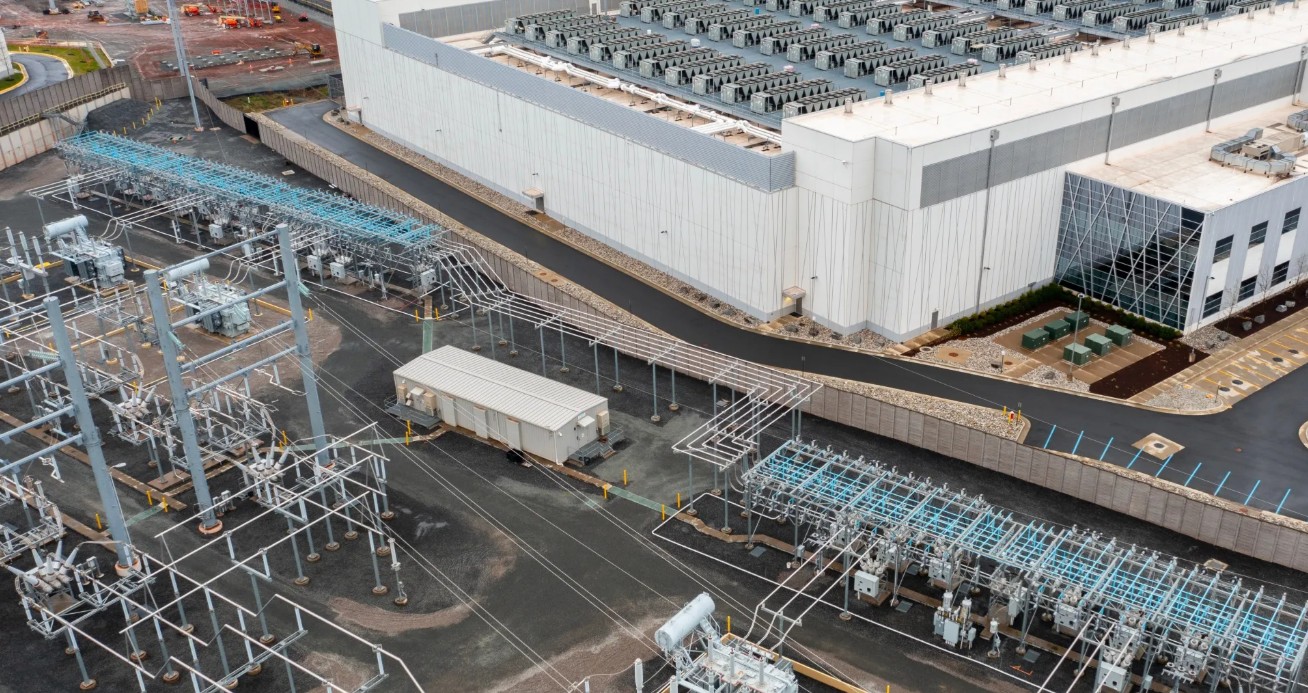
In an era of strategic competition, digital reliability is deterrence. A single outage in a hyperscale facility can ripple across intelligence, surveillance, and reconnaissance (ISR) networks, disrupting real-time operational efficiency. Data centers power the digital age and the associated server farms underpin everything from economic productivity to military decision-making and intelligence operations. Current data center infrastructure is composed of thousands of acres of servers, transformers, and cooling towers scattered across North America. However, these private-sector behemoths remain perilously exposed. In the digital era, failure to treat data and data centers as national defense assets is a strategic blind spot.
The dynamics of deterrence have evolved in the 21st century. Previously, power projection relied on fuel and steel; currently, it relies on megawatts and computational throughput. The physical foundations of the cloud, including transformers, rare earth elements, and copper, are as essential to national security capabilities as shipyards and automobile assembly lines previously were.
The same materials that make fighter jets, missiles, and satellites are what make artificial intelligence (AI), cloud computing, cyber warfare, and command and control possible. When supply chains for these materials falter, such as through Chinese export controls on certain minerals and rare earths, or when power grid bottlenecks delay new facilities, the US military’s ability to process and act on information stalls. A targeted mineral embargo against the United States could undermine the infrastructure that supports military networks for collection and dissemination of ISR information.
For policymakers, the issue is that data centers are dual use. The Pentagon’s Joint Warfighting Cloud Capability (JWCC) and Joint All Domain Command and Control (JADC2) networks utilize the same commercial power and server backbones that serve industry. A disruption in copper, transformer steel, or photonic components slows both sectors simultaneously. The boundary between civilian compute and military command has effectively vanished; resilience in one now requires resilience in the other.
Cloud outages have a major impact on the economy, critical infrastructure, and military operations, meaning the security and the functioning of these data centers are a major national security issue. This article traces the hidden linkage between data centers, component materials, and military readiness. It quantifies the physical footprint of compute infrastructure and examines the emerging vulnerabilities in supply chains and construction timelines before outlining concrete policy steps to harden the ability of US digital computing power.
Read the rest of this Article >>