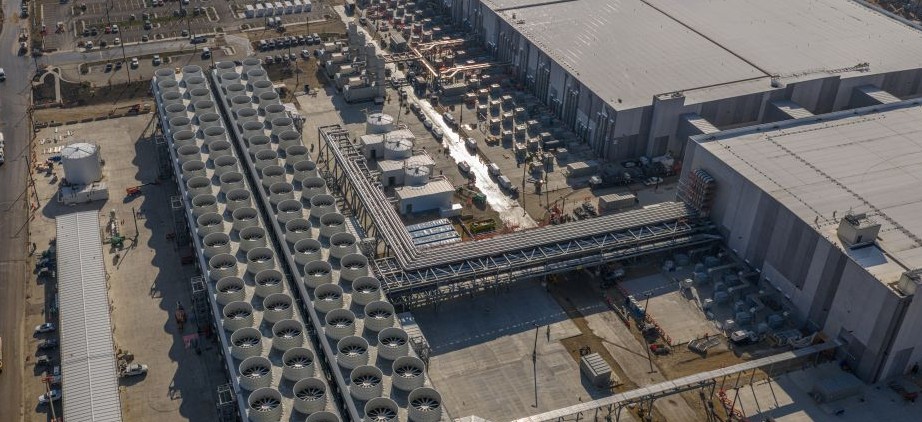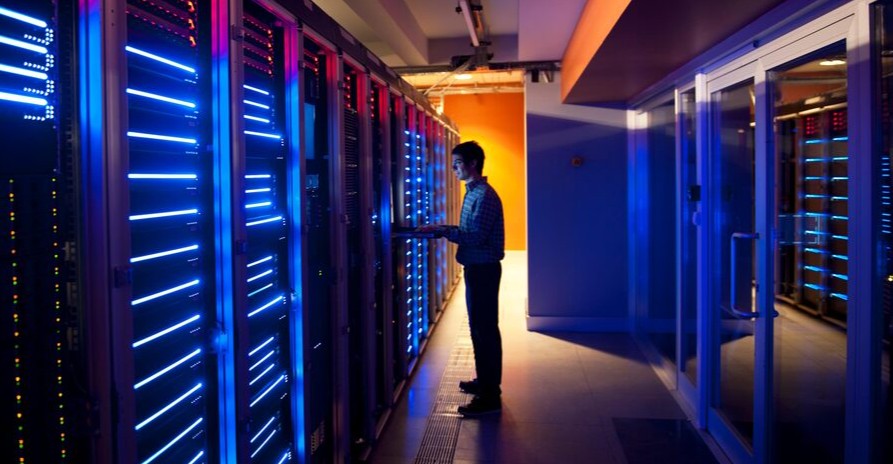
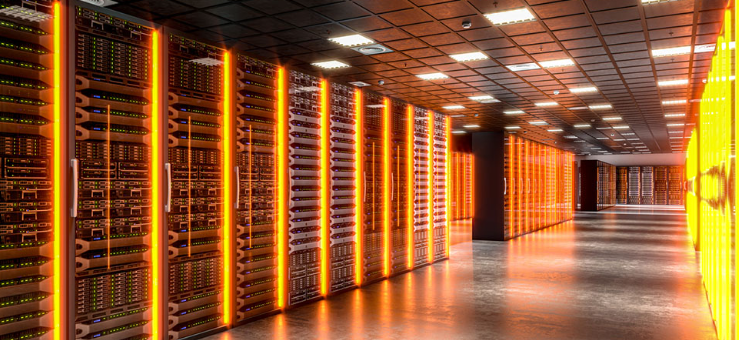
Data center security has historically been structured around the physical and logical perimeter of the facility. Protection strategies have emphasized layered physical controls, access management, surveillance systems, network segmentation, and redundancy within the building envelope. While these measures remain necessary, they are no longer sufficient. The risk profile of modern data centers extends beyond the fence line, shaped increasingly by operational interdependencies with external infrastructure systems, most notably, the electric grid.
Recent analysis of emerging operational security dependencies between data centers and electric utilities underscores the degree to which these sectors are now tightly coupled (HSToday, 2026). Data centers rely on uninterrupted grid performance for operational continuity, while utilities must plan transmission capacity, generation resources, and load balancing strategies around concentrated, high-density data center demand. This relationship is not transactional; it is structural. As hyperscale development accelerates, electricity demand from clustered data center campuses materially influences regional grid planning and investment decisions (Utility Dive, 2024).
This coupling introduces bidirectional risk. Electric utilities consistently identify cyber and physical attacks on transmission and distribution infrastructure as significant reliability threats (North American Electric Reliability Corporation [NERC], Reliability Assessments). High-voltage transformers and critical substation components often require extended manufacturing and replacement timelines due to supply chain and fabrication constraints. Consequently, a successful attack or catastrophic failure upstream of a data center can result in outage durations that exceed the recovery assumptions embedded in many facility-level resilience models (HSToday, 2026).
At the same time, large-scale data center load behavior can influence grid stability. Rapid, synchronized transitions to on-site backup generation, while designed to protect sensitive computing infrastructure, may introduce localized instability if not coordinated with grid operators, particularly in regions with high campus density (Wall Street Journal, 2024). Protective actions taken at the facility level can therefore have system-level implications. Security architecture that does not account for shared operational impact is incomplete.
The distinction between redundancy and resilience becomes central in this context. Uptime Institute’s Annual Outage Analysis continues to identify human error as a leading cause of data center downtime (Uptime Institute, 2023). While redundancy mitigates component failure, resilience addresses systemic disruption. Systemic disruption encompasses grid instability, fuel supply interruption, telecommunications failure, and water system dependency. Federal critical infrastructure guidance emphasizes layered defense and consequence management across interdependent sectors, recognizing that disruption in one domain can cascade into others (Cybersecurity and Infrastructure Security Agency [CISA], Infrastructure Security Framework). Limiting risk modeling to internal mechanical and electrical architectures does not adequately account for these cross-sector exposures.
Convergence between physical and cyber security domains remains uneven despite established guidance calling for integration. NIST Special Publication 800-53 Rev. 5 advocates for unified control frameworks across physical and information systems. In practice, however, physical security operations, network security teams, and facilities engineering often function in organizational silos. Access control events are not consistently correlated with digital privilege activity. Physical presence in secure areas is not always reconciled with system-level authorization. These discontinuities create exploitable seams in otherwise mature environments.
Insider risk further complicates the operating environment. IBM’s Cost of a Data Breach Report 2023 identifies insider-related incidents as among the most costly and time-intensive to detect. Data centers are contractor-intensive environments, with commissioning agents, integrators, maintenance personnel, and tenant representatives moving through restricted zones on a recurring basis. Role-based access control remains foundational but insufficient. Effective programs incorporate time-bound credentials, zone compartmentalization, dual authorization procedures for sensitive areas, and unified audit logging across human resources, facilities, and IT governance systems. Without these structural controls, privilege drift becomes inevitable.
Operational technology (OT) integration introduces additional exposure. The adoption of high-density computing and artificial intelligence workloads is accelerating deployment of liquid cooling systems, intelligent energy management platforms, and network-connected building management systems. Industrial control systems governing chillers, pumps, and switchgear are increasingly integrated with enterprise networks. The ISA/IEC 62443 standards for industrial automation and control system security, long associated with manufacturing and utilities, are becoming directly relevant to data center infrastructure. OT assets can no longer be treated as peripheral technical systems; they constitute core security domains.
Taken together, these developments suggest a structural shift in how data center security must be conceived. Modern facilities function as nodes within a tightly coupled infrastructure ecosystem that includes electric power, telecommunications, water supply, fuel logistics, and human operational systems. The dependency map increasingly defines the risk map. Security strategies bounded by the physical perimeter reflect an earlier operating model, one in which external infrastructure was assumed stable and largely outside the scope of facility governance.
Resilience engineering must therefore extend beyond site architecture to include upstream and downstream dependencies. This includes modeling grid recovery timelines, engaging with utility reliability planning, coordinating backup generation protocols, integrating physical and cyber event correlation, and incorporating OT security frameworks into core design standards. These are governance challenges as much as technical ones.
In Data Center Security: The Blueprint for Resilient Infrastructure, I argue that resilience must be engineered across physical, cyber, operational, and interdependent domains. That position aligns with the evolving conditions described above. The physical perimeter remains necessary as a protective layer. It is no longer sufficient as a boundary for risk assessment.
As digital infrastructure expands in scale and strategic importance, data centers increasingly underpin economic stability, public services, and national security functions. In such an environment, security maturity is measured not only by hardened facilities but by the extent to which organizations understand, and actively manage, the interdependencies that sustain them.
Christopher Hills MBA, CPP, CISM, DCIS, CSM