“There are just a lot of community concerns and issues created by U-M at a time when people are struggling,” Ypsilanti Township Supervisor Brenda Stumbo said. “It’s sad. It’s frustrating.”
Township officials said they aim to force U-M to the industrial site change during the state environmental review process.
The controversy is one of multiple unfolding in Michigan in which grassroots campaigns from across the political spectrum have, or may, derail data center plans. Ypsilanti Township, a municipality of about 55,000 just a few miles west of Ann Arbor, is one of three communities in the area where residents are pushing back against similar plans.
The university did not respond to specific questions from Inside Climate News about the center, resident concerns or township accusations. Instead it noted information posted to its website.
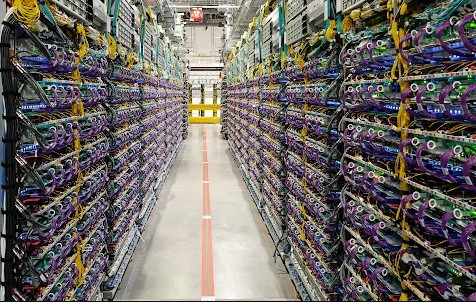
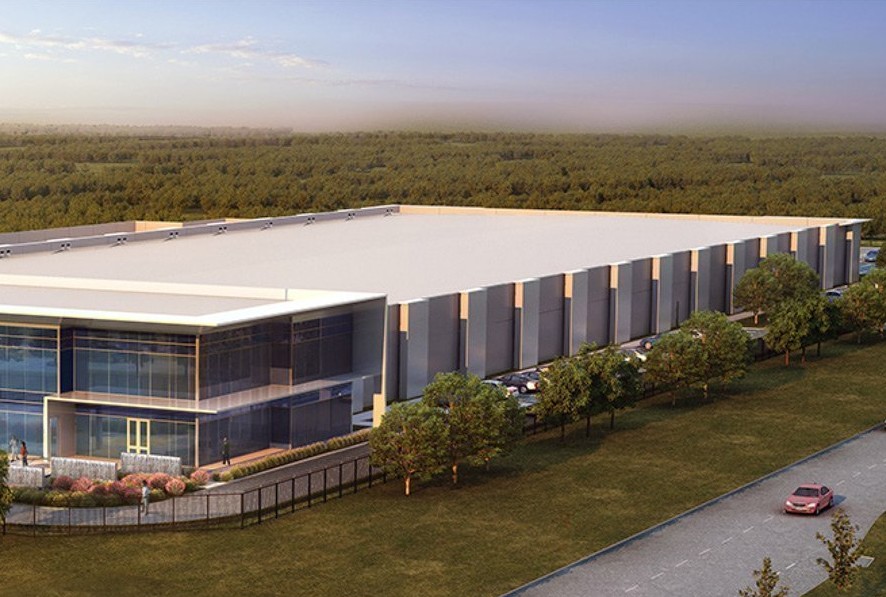
Data centers house infrastructure for facilitating internet traffic and the artificial intelligence boom. Los Alamos, owned by the U.S. Department of Energy, is a federal national security and energy research lab. U-M describes the project in Ypsilanti as a “computation center,” in which Los Alamos would focus on “federal, classified research” in one building, and the university would conduct AI research in another. Construction would begin in 2027.
As data centers’ financial and environmental tolls have become clearer, there has been growing public concern about their impact and costs on nearby communities. In many communities, the centers, which require massive electricity and water consumption, have increased residential utility bills. In Michigan and elsewhere, the centers have required more fossil fuel plants to be built or delay retiring and threaten to derail the transition to clean energy. Opponents also have raised concerns that the centers can be a source of light, noise, water and air pollution.
The anti-data center campaigns in Michigan may succeed at the local level where levers to block projects are available, said Sean McBrearty, director of the Clean Water Action nonprofit, which has called for more environmental and financial protections around data centers.
“The state has a duty to balance the needs of our residents with the desires of these companies and that hasn’t happened,” McBrearty said. “Every step that holds these things up is critical to making sure Michigan residents have a say.”
Read the rest of this Article >>